

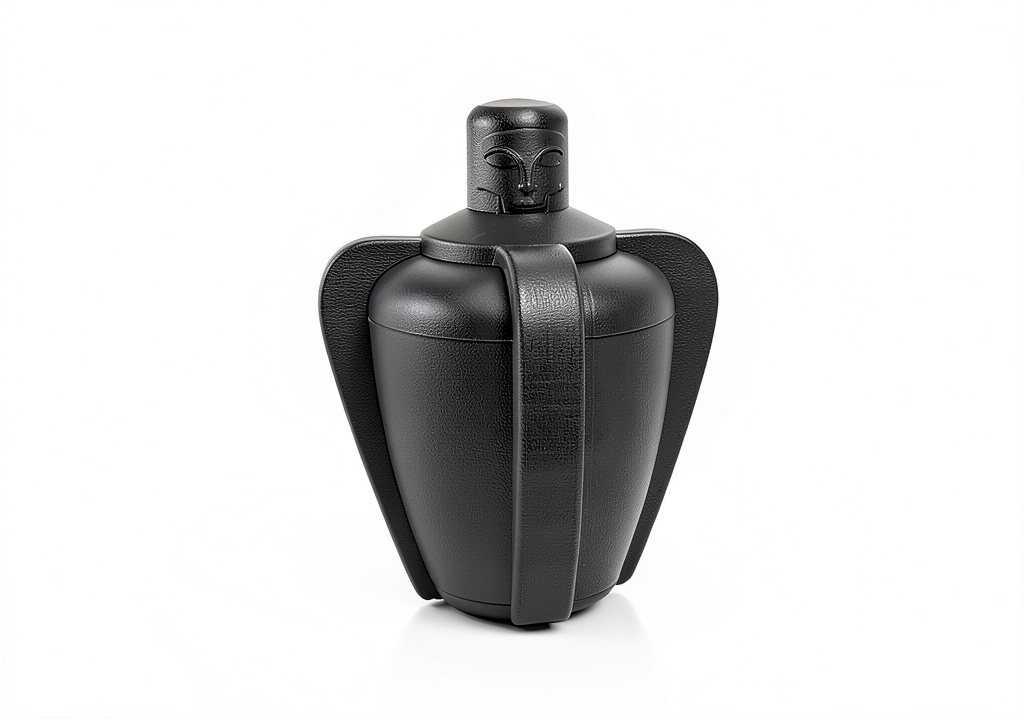


Description
Product Overview
Introducing the Bioshock 3D Plasmid by Pixi3D, a meticulously engineered laboratory‑grade antibody model that bridges the gap between theoretical instruction and tactile experience. This product is the result of an advanced additive manufacturing workflow that combines high‑resolution stereolithography with a proprietary polymer blend, delivering a surface finish that closely replicates the smooth, semi‑transparent qualities of real plasmid structures while providing the durability required for repeated classroom and laboratory use. Measuring precisely 3.5 × 3.5 × 4.75 inches and weighing only 8 ounces, the model is compact enough to fit on standard bench tops, in storage cabinets, or within portable demonstration kits, yet large enough to allow detailed observation of key features such as the circular DNA backbone, selectable marker regions, and binding sites for antibody interaction. The product ships fully printed and ready for immediate deployment, eliminating any need for assembly, adhesives, or post‑processing, which not only saves valuable instructional time but also reduces the risk of user error that can arise during manual construction.
The Bioshock 3D Plasmid carries the Amazon Standard Identification Number (ASIN) B082MRYJQ6 and is listed under the Industrial & Scientific category, specifically within Lab Antibodies, where it consistently ranks among the top‑selling items, reflecting strong demand from educators, research institutions, and hobbyist science communities. Manufacturer Pixi3D recommends the plasmid for users aged twelve years and older, a guideline that aligns with curriculum standards for secondary education and ensures safety for younger students while still providing the depth of detail required by undergraduate and graduate programs. Detailed specifications—including exact dimensions, weight, material composition, and recommended storage conditions—are provided in the product listing to assist purchasers in confirming compatibility with existing laboratory equipment, safety protocols, and environmental controls. The inclusion of a comprehensive data sheet, safety information, and suggested usage scenarios further supports seamless integration into a wide variety of teaching and research workflows.
The plasmid is produced using a state‑of‑the‑art stereolithography (SLA) printer that cures liquid photopolymer with a UV laser, achieving layer thicknesses as fine as 25 microns. This precision ensures that intricate features such as promoter regions, selectable markers, and antibody binding sites are rendered with exceptional clarity, allowing users to trace molecular pathways with a fingertip. Pixi3D sources its polymer from suppliers that meet ISO 9001 quality‑management standards, and the material is certified free of hazardous additives such as bisphenol A (BPA) and phthalates, making the model safe for use in environments where chemical exposure must be minimized. The manufacturing process also incorporates a closed‑loop recycling system that reprocesses excess resin, reducing waste and supporting the circular economy. As a result, the Bioshock 3D Plasmid not only provides an accurate scientific replica but also aligns with institutional sustainability goals and regulatory compliance requirements.
To further support educators, each package includes a QR code that links to an online portal containing high‑resolution images, 3‑D rotation files, and downloadable lesson resources. Instructors can access step‑by‑step guides for activities such as “Designing a Synthetic Plasmid,” “Simulating Antibiotic Resistance,” and “Mapping Gene Expression,” all of which are mapped to common learning objectives in biology and biotechnology curricula. The portal also offers assessment rubrics, safety checklists, and suggestions for integrating the plasmid into interdisciplinary projects that combine biology with computer‑aided design (CAD) or data‑analysis modules, thereby extending the educational impact beyond the laboratory bench.
![[Product front view showing all components]](https://www.dilvora.store/wp-content/uploads/2026/08/6c329b2c2bf44169ac2cb519dd5d4067.jpg)
Usage
The Bioshock 3D Plasmid is designed for versatility across multiple educational and research contexts, making it a valuable addition to any science‑focused environment. In secondary school biology classrooms, teachers can employ the plasmid as a concrete visual aid when introducing concepts such as gene cloning, vector design, and the role of antibodies in immune response. By handling the model, students gain a three‑dimensional perspective that reinforces textbook diagrams, enabling them to visualize how a circular DNA molecule can be manipulated, cut, and ligated during recombinant DNA techniques. The model’s realistic scale also supports hands‑on activities such as mock pipetting exercises, where learners practice transferring precise volumes of liquid to simulate the introduction of plasmid DNA into bacterial cultures, all without the biohazard concerns associated with live microorganisms.
At the university level, the plasmid serves as an indispensable tool for microbiology, molecular genetics, and biotechnology courses. Instructors can integrate the model into laboratory sessions that simulate cloning workflows, allowing students to practice restriction enzyme mapping, ligation strategies, and transformation protocols using a safe, non‑living surrogate. The durable polymer construction tolerates repeated handling, cleaning with standard laboratory disinfectants, and exposure to common reagents, ensuring that the model remains functional throughout an entire semester or even multiple academic years. Researchers in academic or industry labs can also leverage the plasmid as a calibration standard for optical microscopy, fluorescence imaging, and image analysis software, providing a consistent reference object with known dimensions and optical properties.
Beyond traditional classroom settings, the Bioshock 3D Plasmid is an effective tool for virtual and hybrid learning environments. Instructors can incorporate the model into video demonstrations, where close‑up camera work highlights the plasmid’s structural details while narrating the underlying genetic concepts. For remote labs, educators can ship the plasmid to students’ homes, allowing them to perform guided hands‑on activities under live video supervision, thereby preserving the experiential component of laboratory education despite physical distance. The model’s durability ensures that it can be reused across multiple semesters, providing a cost‑effective solution for institutions that need to support large cohorts of learners.
In research applications, the plasmid serves as a reliable surrogate for testing new protocols before introducing live bacterial cultures. For example, laboratories developing novel transformation techniques can first practice the mechanical steps using the 3D printed model, refining parameters such as heat‑shock duration and electroporation voltage without risking contamination. Additionally, the plasmid can be employed as a reference object for calibrating fluorescence intensity in imaging systems, as its polymer composition can be doped with inert fluorescent dyes that mimic the emission spectra of common reporter proteins. This flexibility enables scientists to validate instrument performance and data analysis pipelines in a safe, reproducible manner.
Interdisciplinary projects benefit from the plasmid’s ability to serve as a bridge between biology and computational fields. Students can import the provided 3‑D rotation files into CAD software to modify the plasmid’s geometry, experiment with virtual gene insertions, and simulate the effects of mutations on protein expression. Data‑analysis courses can use the model as a case study for statistical evaluation of experimental outcomes, encouraging learners to apply quantitative methods to biological data sets. By fostering collaboration between biology, engineering, and computer science students, the plasmid promotes a holistic STEM education approach that mirrors real‑world research environments.
For institutions embracing emerging technologies, the Bioshock 3D Plasmid can be integrated into augmented reality (AR) and virtual reality (VR) platforms. Using the QR‑linked 3‑D files, developers can create immersive simulations where users manipulate the plasmid in a virtual lab, observe molecular interactions in real time, and receive instant feedback on experimental design choices. This capability expands the reach of hands‑on learning to remote learners, enabling them to experience tactile engagement through haptic devices or visual immersion without the need for physical specimens.
Why Choose Us
Selecting the Bioshock 3D Plasmid from Pixi3D means aligning with a company that places scientific accuracy, material excellence, and customer support at the forefront of its product philosophy. Our proprietary additive manufacturing process utilizes a high‑performance polymer that is both chemically inert and mechanically resilient, offering resistance to scratches, impacts, and the routine cleaning cycles typical of laboratory environments. Each plasmid undergoes a multi‑stage quality‑control regimen that includes dimensional verification using calibrated metrology equipment, surface texture analysis to ensure a smooth, non‑porous finish, and functional testing to confirm that the printed features accurately represent the intended biological architecture. This rigorous approach guarantees that every unit meets exacting standards for educational fidelity and durability.
Sustainability is a core component of Pixi3D’s operational ethos. The polymer material is recyclable, and our printing facilities employ energy‑efficient laser systems and waste‑reduction protocols, reducing the environmental footprint associated with traditional manufacturing methods. By choosing our product, institutions can demonstrate a commitment to responsible procurement practices while providing students with a state‑of‑the‑art learning tool.
In addition to the physical product, Pixi3D supplies an extensive suite of supporting resources designed to maximize the educational impact of the plasmid. Customers receive a detailed user manual that outlines safe handling procedures, suggested experiment outlines, and troubleshooting tips. We also provide a curated collection of lesson plans aligned with national science standards, enabling teachers to integrate the plasmid into curricula covering genetics, biotechnology, and bioethics. For researchers, we offer technical documentation that includes dimensional drawings, material safety data sheets, and recommended storage conditions, facilitating seamless incorporation into existing laboratory protocols.
Pixi3D’s dedication to continuous improvement is reflected in its active feedback loop with the scientific community. We regularly solicit input from educators, researchers, and industry partners to refine product design, update instructional content, and introduce new plasmid variants that reflect emerging trends in synthetic biology. Recent updates include the addition of color‑coded regions that correspond to functional domains, allowing users to quickly differentiate between promoter, coding, and terminator sequences during hands‑on activities. This iterative development process ensures that the Bioshock 3D Plasmid remains at the cutting edge of educational technology and stays relevant to evolving curriculum standards.
Our global distribution network ensures rapid delivery to institutions worldwide, with fulfillment centers strategically located to minimize shipping times and carbon emissions. Customers benefit from transparent pricing, bulk‑order discounts, and the option to customize the model with institution‑specific branding or additional accessories such as magnetic bases or protective cases. All shipments are accompanied by a detailed compliance package that includes material safety data sheets (MSDS), regulatory certifications, and a certificate of authenticity, providing peace of mind for procurement officers and safety officers alike.
Pixi3D offers a suite of professional development resources, including live webinars, on‑demand training modules, and certification programs that empower educators to maximize the pedagogical value of the plasmid. Participants can earn a “Certified Molecular Model Instructor” badge after completing a series of instructional workshops that cover best practices for integrating the model into lesson plans, assessing student outcomes, and troubleshooting common challenges. These credentials not only enhance teaching portfolios but also provide institutions with documented evidence of faculty expertise in modern biotechnology education.
Our user community thrives on an active online forum where educators, researchers, and hobbyists exchange ideas, share lesson adaptations, and propose enhancements for future product iterations. The forum is moderated by Pixi3D scientists who provide expert guidance, answer technical questions, and highlight innovative applications submitted by members. This collaborative ecosystem ensures that the Bioshock 3D Plasmid remains a living resource that evolves in response to the needs of its diverse user base, fostering continuous improvement and shared success.
Key Features
- High‑resolution 3D printed polymer delivers realistic anatomical detail for hands‑on learning.
- Fully assembled upon arrival, eliminating setup time and reducing classroom preparation effort.
- Lightweight yet robust construction withstands frequent handling and cleaning without damage.
- Compact dimensions fit easily on standard lab benches, storage trays, and portable kits.
- Dedicated after‑sales support includes documentation, lesson plans, and responsive technical assistance.
FAQ
What material is the plasmid made from?
The plasmid is printed from a high‑strength, non‑porous polymer specifically formulated for laboratory models, offering durability and a realistic tactile experience.
Is any assembly required before use?
No assembly is needed; the product arrives fully printed and ready for immediate integration into teaching or research activities.
Can the plasmid be used with standard microscopy equipment?
Yes, the dimensions and surface finish are compatible with most light microscopes and imaging systems, making it suitable for calibration and demonstration purposes.
What age group is the product recommended for?
Pixi3D recommends the plasmid for users aged twelve years and older, covering high school students, undergraduate learners, and professional researchers.
How does the plasmid compare to real biological samples?
While the 3D printed plasmid does not contain actual DNA or biological activity, it accurately replicates the size, shape, and key structural landmarks of a real plasmid, allowing users to practice handling techniques and visual identification without biosafety concerns.
What warranty does Pixi3D provide?
Pixi3D offers a twelve‑month limited warranty covering manufacturing defects. If a defect is identified, we will repair or replace the unit at no cost, ensuring uninterrupted use for educational and research purposes.



 Yuantide Bio Yuantide Soy Peptone(SV01) Net Content 280g (9.6oz), for Mycology and Microorganisms
Reviews
There are no reviews yet.